Tech & Innovation
Celebrating Deep Technological Innovation in the Arab World: The Story of Dermandar
Written by Ramzi Jaber, Co-founder at VAES.ai
Published: 23rd July 2026 6:00 AM
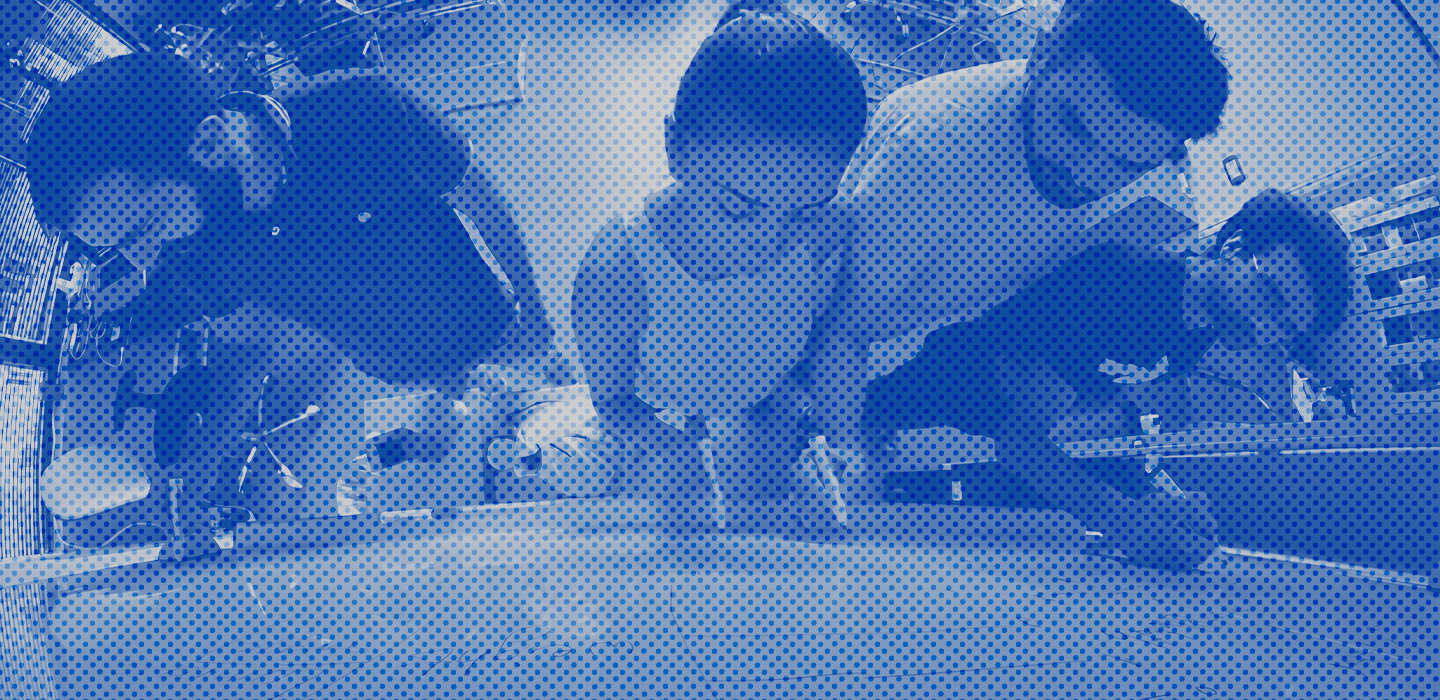
Dermandar Team. Captured from www.youtube.com/watch?v=YMSMdMtG8L4&ab_channel=ClarkCosta (2011).
You want to develop a tool better than Microsoft?
Elie Gregoire-Khoury recalled his colleague’s incredulous question during a 2012 talk for tech innovators in Beirut. I could not help but smile in admiration from the audience, knowing the challenging journey of tech startups in the Arab World — strict regulations, insufficient funding, unreliable infrastructure, and brain drain. Despite these hurdles, Gregoire-Khoury took no shortcuts when developing Dermandar, or DMD Panorama, his photo-stitching mobile app. Unlike other startups in the Arab World, Dermandar is homegrown, not imported, making its story of the utmost significance. I reflect and write about Gregoire-Khoury’s talk today as I develop VAES.ai, because it remains a rare example of original technical innovation originating from the Arab World. At VAES.ai, we are inspired by such stories. What sets us apart is our commitment to reversing the flow of knowledge. We aim to innovate from within the Arab World, creating groundbreaking technologies that can take the on lead the global stage.
Dermandar is a photo stitching app that takes panoramic photos of landscapes. The name Dermandar is a Levantine term that originates from the Arabic phrase داير ما يدور (pronounced “Da-yer Ma Ye-door”) which means circulating all around. I recall my uncle using the app to capture panoramic photos of my grandmother’s gorgeous, expansive garden. Dermandar was launched in 2011, two years before the emergence of native panoramic IOS and Android cameras. This guy beat the titans of Silicon Valley.
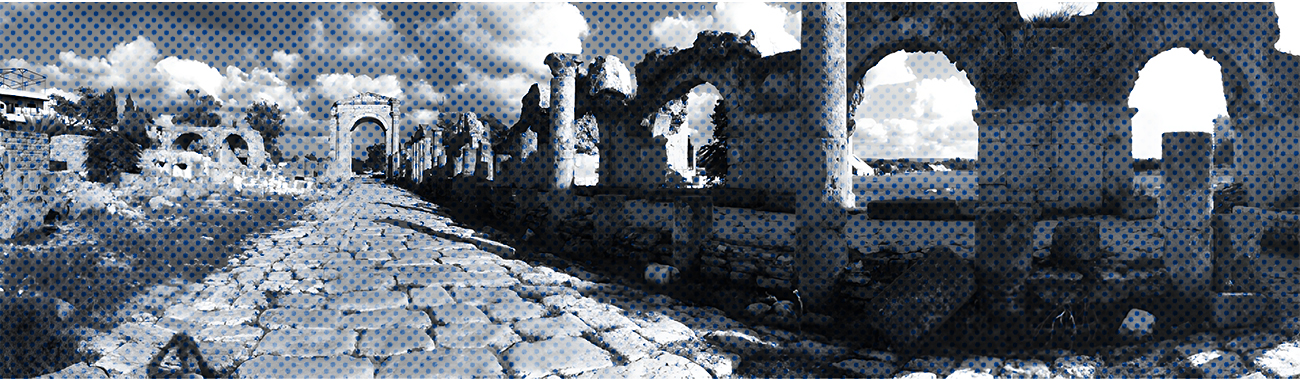
Panoramic image captured using DMD App, Source: Dermandar.com
The app garnered focus and interest from the tech industry
Dermandar was downloaded 10 million times and voted World’s Best App at the World Summit Awards for mobile content. It was described as “the easiest-to-use panoramic picture app on the iPhone” by Wall Street Journal (WSJ). On top of that, one of Google’s first 10 employees, Georges Harik, invested $5 million for 5% equity. Apple and Tony Fadell, the product creator and originator of the iPod, extended personal congratulations to Gregoire-Khoury. Dermandar released an API that enabled its software to be integrated into other apps, one of which was Cycloramic, an app used by Apple co-founder Steve Wozniak. After attending Gregoire-Khoury's talk, I was so fascinated that I reached out to him for a call to learn more about his groundbreaking journey.
Elie Gregoire-Khoury, who goes by EGK for short, is a mathematician who graduated from both Lebanese and French universities and was head of R&D at Ubisoft, a leading French game development firm, for 7 years. He left Ubisoft to work on Dermandar, with plans to launch the app ahead of other photo stitching tools. However, the need for improvements in speed, resolution, and usability delayed the launch to June 2011—just two months after Microsoft introduced Photosynth, its own free photo-stitching app. Initially, EGK planned to release Dermandar for $1.99, but in light of Microsoft’s unexpected market launch, he convened with his team and proposed releasing Dermandar for free. He was focused on developing a faster, higher resolution, and more robust app to compete with Microsoft’s offering.
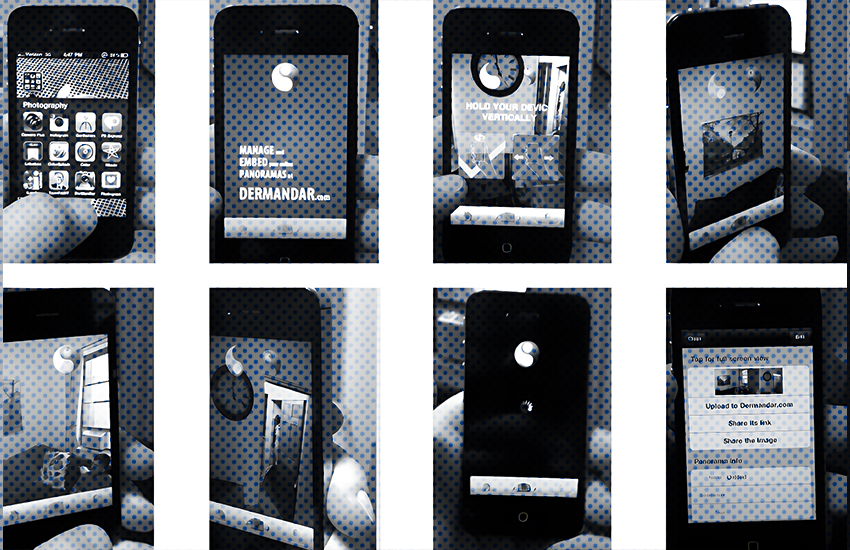
Process of capturing panoramic images with DMD Panorama App. Captured from www.youtube.com/watch?v=YMSMdMtG8L4&ab_channel=ClarkCosta (2011).
EGK and his team developed deep tech with limited resources and quite a few obstacles.
Photo stitching is not a simple technical feat. It requires deep knowledge of both mathematics and image processing. Any photo stitching software must first discern the geometric relationship between pairs of images. Subsequently, a process known as homography is employed to warp one image to match the coordinate frame of the other. The final step involves the elimination of visual seams. The product is a three-dimensional scene captured through a set of images from roughly the same viewpoint by rotating the camera. To safeguard this foundational technology, EGK employs his own encryption method. To date, no one knows the details that differentiate his technology from competitors.
At the 2012 talk, EGK spoke of the difficulties in launching a startup in the Arab world. One example that blew my mind: simply downloading Apple’s SDK (software development kit) consumed the entire months’ worth of internet bandwidth. Imagine, his home had to go without internet for that whole month. He described how his team had to split the SDK into four USBs that were given to people who had not exhausted their monthly quotas. One of those people was his son's schoolmate. Put simply, Dermandar’s technology was developed resiliently—without reliable internet or developed infrastructure or a supportive environment, to say nothing of R&D credits, grants, and other forms of funding.
EGK was pioneering in unfamiliar territory.
When EGK started developing Dermandar, the tech startup ecosystem had not yet taken off in Lebanon. The startup’s sole venture capitalist (VC) funder, Berytech, offered $210,000 for 35% equity—on par with offers given to other startups with mere concepts. This was despite Dermandar’s proven technology and media traction. At the time, Dermandar was featured on multiple media platforms, including The Gadget Show. In the Beirut talk, EGK highlighted the severe lack of investment in the region when he recalled Autodesk’s $60 million acquisition of Socialcam, which offered little more than a hack to make shared posts on Facebook more viral, without any deep technology integrated into the platform. This occurred just months after Facebook’s acquisition of Instagram—triggering an acquisition race driven more by the fear of missing out than by the pursuit of technological innovation. EGK successfully developed a technology that was technically challenging into a useful and sought-after app regardless of the immense difficulties of entrepreneurship in the region. As I listened to EGK with awe, I could not shake my frustration over the lack of resources that shaped the journey of this novel technology.
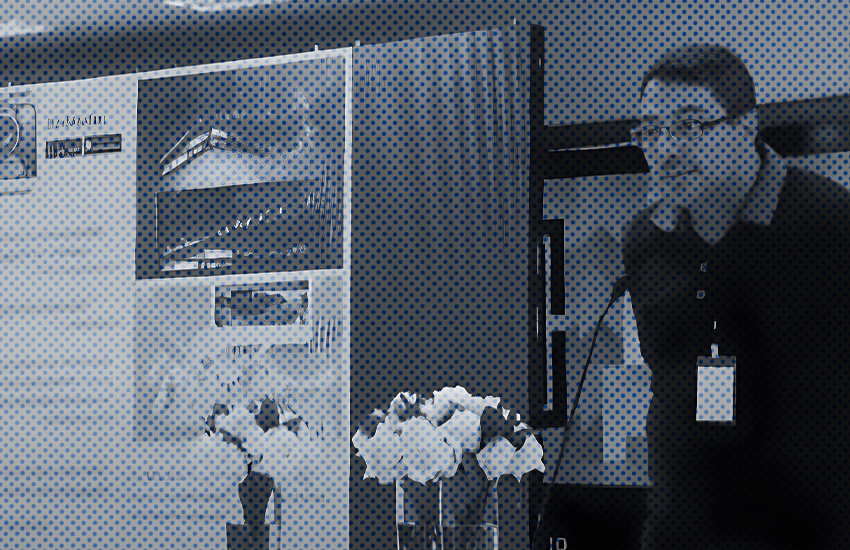
EGK's talk at Banque du Liban's 2013 Startup Workshop, captured from www.youtube.com/watch?v=W18vkhQt4Yc&ab_channel=BanqueduLiban
Dermandar navigated setbacks and evolved in a challenging market.
Following Dermandar’s initial success, EGK provided advanced technological services to major tech companies, but these contracts fell through due to external factors. In 2020, Dermandar signed a contract with Bossa Nova Robotics, licensing their image stitching software for inventory management. Dermandar’s tech was to be integrated into 600 autonomous, shelf-scanning robots across 600 Walmart stores, providing real-time reporting. At the time, Bossa Nova reached out to EGK claiming that Dermandar was the only company in the industry capable of achieving their request—the live stitching of tens of thousands of images carrying billions of pixels. Unfortunately, the project did not go through due to the economic downturn caused by COVID-19. Another commercial opportunity was Nokia’s OZO, a high-resolution, video-stitching VR camera. Nokia approached EGK to integrate his image stitching technology as a service, but Nokia’s project collapsed in 2017, and the OZO team dissolved.
Given these challenges, I asked EGK to share how Dermandar’s technology pivoted and is currently evolving. EGK now focuses on VR tech with StereoStitch, a video stitching software for VR cameras, and is also building hardware for real estate. He is still operating out of Lebanon, but I am convinced after our recent conversation, that he would have enjoyed significantly more funding or an acquisition had he relocated to the U.S. In Lebanon, he operates in relative obscurity.
How often does technical innovation originate from the Arab world? Knowledge transfer can go the other way.
The Arab world’s major success stories range from Maktoob (acquired by Yahoo), Souq (acquired by Amazon), Careem (acquired by Uber), and Kitopi (raised 400$ million). These startups, and their founders, are all impressive—they managed to penetrate a market riddled with all sorts of challenges including difficult financial regulation, lack of credit cards, fragmentation of transportation, a dearth of talent, and the need to tailor to local markets, to name a few. However, it is worth noting that these tech ideas were adapted from existing global models and brought to the Arab world, rather than originating from locally developed deep technology. Having said this, there are attempts at deep tech startups in the region. One example is Derq which represents a fundamentally different kind of innovation. It is a homegrown deep tech startup consisting of an AI platform that enhances road infrastructure for self-driving cars. While the original idea emerged from the founder’s PhD research at MIT, Derq was further developed and scaled in the Arab World—marking a shift from adaptation to the creation and regional advancement of original deep technology. This is the reason I write about EGK’s startup. Besides being an interesting entrepreneurial venture, Dermandar is the story of creating a deeply technical solution before any of the major tech powerhouses did. I believe there is distinct value in creating knowledge and transferring it to the West—a route that is less traveled.
The Arab world does not yet produce deep technical innovations, but our team is invested in years of R&D to develop tech that will exemplify a change in this landscape.
There are many reasons for the lack of deep technical innovation in the region—the lack of significant corporate R&D, government-funded research centers, and university research.
That is why I am proud of the technology we are building at VAES.ai. We are creating something that is yet to be invented. VAES.ai is a climate-focused, deep tech platform that uses optimization and machine learning algorithms to enhance structures and reduce the volume, cost, and carbon of raw materials (concrete and steel) required to design and build our cities. We have invested over four years in R&D—pouring significant resources in research and experimentation as we incubate VAES.ai on real-world client-based projects with engineering teams.
We are situated in the Gulf. It is not Lebanon, and we have sidestepped many of the obstacles Dermandar had to overcome. While it is not yet the most ideal environment for research-based deep technology, it is an area where construction technology is quite advanced. After all, Dubai is home to the world’s tallest building (Burj Khalifa) and one of the first 3D-concrete printed offices (Office of the Future). With VAES.ai, our challenge and mission is to innovate in our industry locally, while deriving lessons for global issues and implementation. By taking the road less travelled, we may not know exactly the destination or when we will "get there", but for us, this is what it’s all about.