Tech & Innovation
The Hindered Adoption Series:
Why the building industry lags behind in innovation and digitalization
Written by Ramzi Jaber, Cofounder of VAES.AI
Published: 1st October 2022 12:34 PM
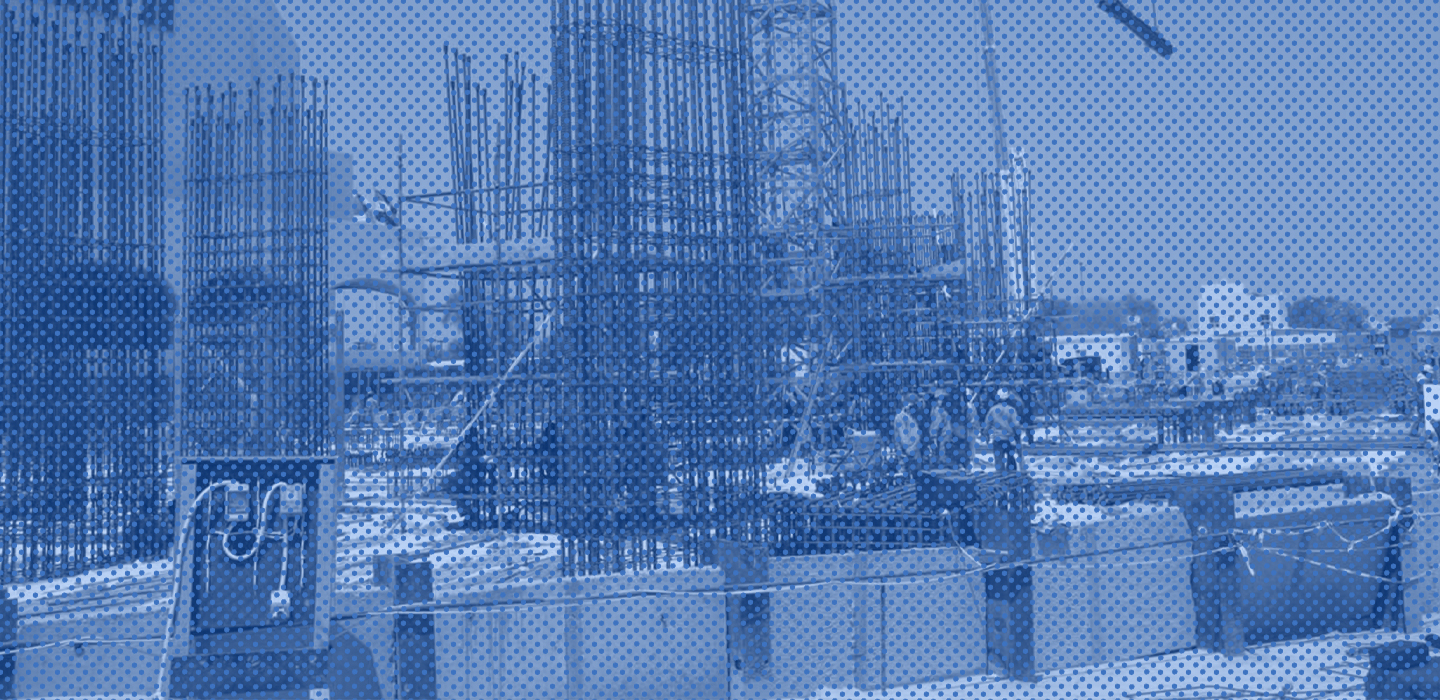
Construction site of the H.H.H Tower in Dubai
In his influential 1968 paper titled “The Structural Engineer,” visionary structural engineer Ore Arup introduces his readers to a fictional character named Earnest. From a young age, Arup tells us, Earnest had an inquisitive mind, a knack for the natural sciences, and an interest in problem solving. When he became college aged, he elected to become a structural engineer.
Earnest was excited for his first job at a firm, but when he arrived on the construction site, he was shocked to find that his theoretical calculations hardly matched the reality of actual built structures. Over time, he became excited about new materials and technological advancements in the construction industry, but he found it difficult to implement them: architects worked independently of structural engineers, taking a number of important decisions out of his hands, and other project stakeholders seemed uninterested in optimizing the efficiency of the actual construction process.
“Contractors were reluctant to plunge into the unknown, departures from normal would be discouraged by high rates, and in case costs were guarded as a secret,” Arup wrote. Soon enough, Earnest realized “that the real fault lay neither with the architect nor the contractor, but with the whole way in which the building industry was organized, and geared to an out-dated technology.”
Having used Earnest to make his point, Arup then addresses the reader directly:
“Much has happened in these years, technology has advanced in leaps and bounds. The building industry for a long time lagged behind, but we are now all aware that great changes are upon us.”
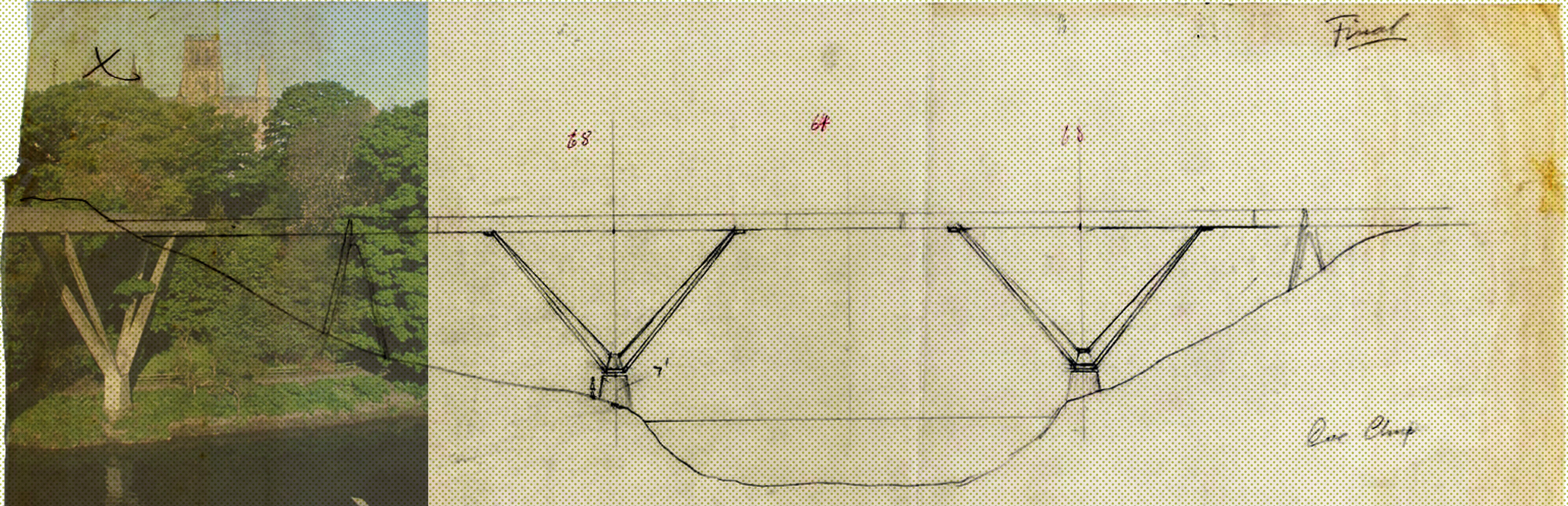
Overlaid sketch representing Ove Arup's design concept for Kingsgate Bridge
But half a century after Arup published his paper, many of the problems he identified still persist. Although it is one of the largest industries in the world, the architecture, engineering, and construction, or AEC, industry has historically been slow to adopt new innovations. It remains one of the least digitized sectors globally, trailing behind industries like finance, healthcare, and manufacturing. Despite decades of technological progress in everything from design optimization software to more sustainable building materials, the industry today operates much in the same way as it has for the past half century.
This failure to innovate has significant implications for global efforts to decarbonize, in addition to perpetuating inefficiencies in the construction process. Today, the AEC industry is responsible for roughly 18% of global annual greenhouse gas emissions, raising critical questions:
What can explain the AEC industry’s deep-rooted resistance to adopting innovation and change?
A Longstanding Reluctance to Change
In their 2004 book Innovation in Construction: A European Analysis, authors Marcela Miozzo and Paul Dewick argue that innovation itself is not the issue in the AEC industry. Since the 1950s, technologists have developed a litany of powerful innovations including new materials, prefabricated modular building components, on-site mechanization, and new structural solutions, among others.
“Nevertheless, the rate of adoption of innovation remains slow, and the view of the sector as conservative persists,” the authors concluded. Why? According to our research, expert and scholarly theories fit into five overarching themes:
Fragmentation
The problem: The construction process is highly fragmented and consists of many stakeholders — clients, architects, engineers, contractors, and subcontractors — who often work together only once. Short-term project-based contracts limit incentives for long-term collaboration and the integration of new technologies. As a result, knowledge sharing and systemic change are difficult.
What researchers say: Scholars have repeatedly found that fragmentation in construction fundamentally limits the flow of knowledge and slows the adoption of innovations. A 2010 article by Anna Dubois and Lars-Erik Gadde describes the industry as a “loosely coupled system” where stakeholders interact within individual projects, but broader links between firms and across projects are weak.
“The fragmentation process in traditional contracting practice further hinders the integration of construction knowledge among contractors, diminishing the opportunity for them to influence design decisions,” wrote researchers from University Utara Malaysia in a 2014 paper.
In a 2011 study, researchers conducted interviews with top managers to explore how project teams share their knowledge within a fragmented environment, and found that “by and large, the augmentation of small and medium enterprises (SME) vis-a-vis to the tapering of the large ones causes fragmentation of construction industry.”
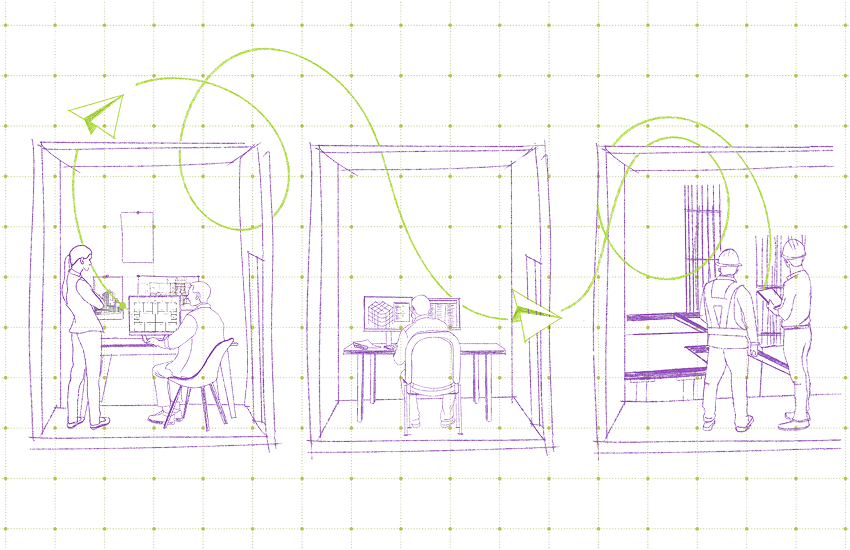
Construction stakeholders operate in a highly fragmented environment with limited system integration
Distinctiveness of Projects
The problem: Each construction project is unique. Unlike mass manufacturing, where economies of scale drive innovation, construction must contend with bespoke requirements, making it difficult to standardize and replicate successful digital solutions across projects.
For example, a developer may want to construct identical apartment buildings in two different districts or cities. Given that the structures are effectively the same, the construction process could technically be streamlined; however, different site constraints, permitting rules, or regulatory requirements might make it difficult to repeat the process.
What researchers say: Scholarly research consistently finds that the unique, one-off nature of construction projects presents a fundamental barrier to innovation adoption. A 2019 article from McKinsey notes that construction projects are “nearly always one-of-a-kind endeavors,” making it difficult to standardize workflows, measurement frameworks, or technological solutions across sites. This distinctiveness reduces the applicability of innovations from one project to another, increasing perceived risk and lowering incentives for widespread adoption.
A 2023 study in the Journal of Engineering and Technology Management shows that the temporary, project-based structure of construction complicates innovation diffusion because outputs and processes vary so widely across individual projects.

Dubai Marine skyline where every plot features a uniquely designed building.
Regulatory Rigidity
The problem: Construction operates in a highly regulated environment where performance, safety, and design standards are tightly controlled. These rules are essential for ensuring structural integrity and protecting public welfare, but they also create a cautious, risk-averse industry climate. Even when new technology is available, it may not meet existing codes, since regulations often lag behind technological advancements. This means that an engineer or contractor attempting to use a novel material, digital tool, or construction method may face a long approval process or extensive documentation. Many opt not to attempt it at all.
What researchers say: Academic researchers have long documented that building codes and regulatory systems can slow innovation diffusion in construction. A U.S.-based analysis from 1977 found that outmoded local building codes impeded the adoption of new construction techniques and materials, with factors like the educational background of officials and local labor structures explaining differences in how quickly changes occurred. These effects underscore how regulatory frameworks rooted in precedent — even if well-intended — tend to privilege compliance with established norms over experimentation with new technologies.
More recently, a 2021 article from France notes that stringent or poorly aligned regulations can lower the overall rate of innovation adoption by increasing compliance costs and diverting resources away from experimentation. Interestingly, the French researchers find that “a more regulated economy may have less innovation, but when firms do innovate they tend to ‘swing for the fence’ with more radical (and labor saving) breakthroughs.”
Lack of Incentives
The problem: The way contracts are structured often discourages innovation by transferring risk downstream and prioritizing the lowest price. If a new technology fails or causes delays, the contractor absorbs the cost. Clients will often go for the cheapest bid, foregoing more innovative techniques like modular construction with higher up-front costs. Margins are thin, discouraging investments in new digital systems.
What researchers say: In a 2020 report, researchers at McKinsey spell out the construction industry’s poorly incentivized ecosystem:
Owners often tender projects at the lowest cost and pass on risks such as soil properties or rising prices for materials that they might better handle or absorb themselves. Engineers are often paid as a percentage of total construction cost, limiting their desire to apply design-to-cost and design-to-constructability practices. General contractors are often only able to make profits via claims, so rather than highlighting design issues early in a project they often prefer charging for change orders later. Incentives and discounts from distributors and material suppliers to subcontractors obscure material prices.
The result, the researchers conclude, is a system riddled with unsophisticated supply chains, where competition is based more on low-price guarantees than quality, reliability, or alternative design offerings.
Undefined and Unstandardized Workflows
The problem: Unlike industries with clear, uniform process maps — such as car manufacturing or electronics — construction workflows differ dramatically from firm to firm, project to project, and even team to team. Large firms often grow through acquisitions, absorbing smaller companies with their own tools, documentation habits, software environments, and internal cultures. The result is a patchwork of legacy systems that do not easily communicate with one another.
What researchers say: A 2024 study published in the journal Buildings found that the benefits of BIM (Building Information Modeling) — often viewed as a proxy for a construction firm’s digital maturity — are often undercut by inconsistent workflows and a lack of shared standards across teams. Researchers noted that many contractors apply BIM only in planning phases, and then revert to traditional practices on site because existing work habits and processes don’t align with digital tools. They write:
A scoping review of BIM adoption research mapped hundreds of studies showing that fragmented practices, inconsistent workflows, and interoperability issues are among the key barriers that prevent digital tools from being embedded into everyday construction processes.
Similarly, a 2024 study on Integrated Digital Delivery (IDD) in Hong Kong found that one of the top obstacles to digital adoption was poor interoperability between software systems and a lack of common data standards. Because firms and project participants use different tools and formats, the authors concluded, coordinating digital models and sharing information across teams becomes difficult, slowing workflow integration and undermining confidence in digital systems.
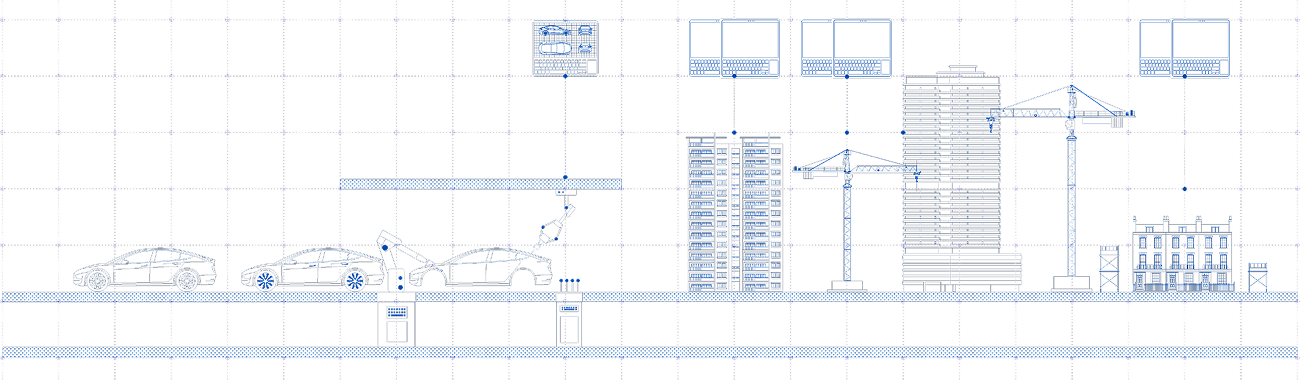
An illustration comparing the workflow of the car industry and the construction industry
The Hindered Adoption Series
The tBE team is exploring the AEC industry’s hesitation to adopt new innovations. Across a series of articles, we will interview scholars and industry experts, delve into specific case studies, and crunch the numbers to better understand the causes of the industry’s stagnation and offer scalable solutions. We will look at technical, economic, social, and regulatory barriers to innovation across the lifecycle of a construction project — from the cement manufacturing plant to the project site.
Have a suggestion for an article that should be part of this series? You can reach out to the tBE team here.