Climate & Technology
Out of context: How the sustainability discourse is greening our yellow.
Published: 24th May 2026 12:21 PM
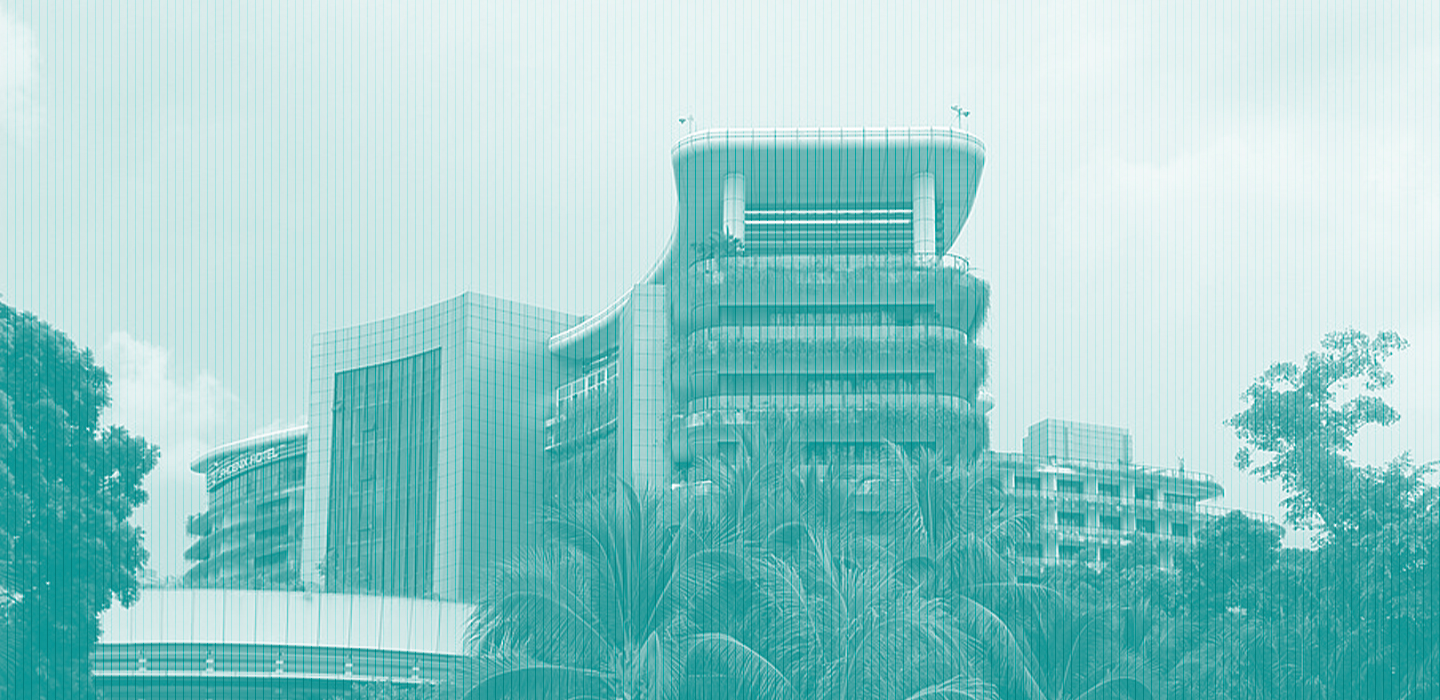
Across the Middle East and North Africa, the question of how to adapt cities to a changing climate has become increasingly urgent. In an effort to align urbanization with global climate goals, governments are pouring billions into “green” urban projects — from Saudi Arabia’s NEOM and Egypt’s National Initiative for Smart Green Projects to Abu Dhabi’s Masdar City — all promising to make the region’s urban centers more sustainable.
On the ground, this promise takes on a familiar visual language: solar-paneled towers rising from the desert, vertical gardens climbing glass facades, irrigated parks unfurling in climates defined by scarcity. Sustainability, in these cities, has come to look unmistakably green.
But beneath these shimmering surfaces lies a more difficult question: whose vision of sustainability are these cities built upon — and what assumptions does it carry with it?
Across the region, the answer is visible in the landscape itself. Lawns stretch across hotel grounds in the Gulf. Trees line highways on the outskirts of Amman, sustained through constant irrigation. In Cairo, new desert developments promise green, “smart” living while remaining dependent on energy-intensive infrastructure and disconnected from the dense, overheated commercial centers. Sustainability, in practice, is often measured by how closely cities approximate a temperate, verdant ideal.
The green aesthetic of sustainability is not locally derived, but produced and enforced through a set of global development agendas, certification systems, and planning frameworks that define what sustainability is supposed to look like.
Over the past two decades, international rating frameworks such as LEED (developed by the U.S. Green Building Council) and BREEAM (which originated in the United Kingdom) have become benchmarks for sustainable construction worldwide. These systems reward projects for incorporating green roofs, landscaped open space, and vegetative cover. While these aspects tend to perform best in temperate environments, they are widely promoted in arid ones where they often require significantly more resources to function. Under LEED, for example, projects can earn multiple credits for providing open space with vegetated areas and for incorporating green roofs as part of site and heat island reduction strategies.
Similarly, global institutions such as the World Bank and United Nations have promoted standardized urban sustainability frameworks, from “green growth” strategies to resilience indices, that circulate across vastly different geographies. The World Bank’s “Green, Resilient, and Inclusive Development” (GRID) framework, for instance, ties financing to projects that meet standardized environmental performance indicators, often emphasizing green infrastructure, urban greening, and climate “resilience” without differentiating between ecological contexts. UN-Habitat’s City Prosperity Index is explicitly intended to [“facilitate convergence”](https://unstats.un.org/unsd/statcom/groups/expert_groups/City_Prosperity_Index/?) in how cities assess sustainability — effectively encouraging urban environments with radically different ecological conditions to conform to a shared set of global metrics.
Even international climate benchmarking tools like the C40 Cities Climate Leadership Group frameworks and the Global Covenant of Mayors for Climate & Energy encourage cities to adopt standardized mitigation strategies, including urban greening and nature-based solutions, as visible markers of progress.
In practice, these systems shape not only how sustainability is measured, but how it is built. Access to funding, international recognition, and investor confidence often depends on alignment with these frameworks, creating strong incentives for cities to adopt green aesthetics and policies that conform to global expectations even when they do not make sense within local environmental realities.
How Sustainability Became Green
The intellectual foundation for this global circulation of ideas has been examined closely by Dipesh Chakrabarty, a historian whose work bridges climate science and postcolonial thought. In his book The Climate of History in a Planetary Age, Chakrabarty shows how concepts produced in specific historical and geographic contexts — particularly in Europe — are often universalized and presented as solutions to a global crisis. As he writes, contemporary climate discourse remains “structured by the experiences and concepts of the developed world,” even as it claims to address a shared planetary condition.
Chakrabarty’s work helps explain a broader pattern in which climate knowledge systems, including global emissions models and scenarios, are built on data and assumptions derived from industrialized economies and then applied across vastly different contexts. In practice, this means that cities as different as Copenhagen and Cairo are evaluated through similar sustainability metrics, despite radically different climates, infrastructures, and social conditions.
The Spectacle of Green
This dynamic is particularly visible in what urbanist Yasser Elsheshtawy has described as the rise of the “spectacle city” in the Gulf — urban environments shaped as much by image, branding, and global visibility as by lived realities. In works such as Dubai: Behind an Urban Spectacle, he examines how cities like Dubai are produced through iconic architecture, megaprojects, and carefully curated visual identities that signal modernity and global relevance.
In an interview with our team, Elsheshtawy extended this critique to contemporary sustainability discourse, arguing that international certification systems, developers, and state-led megaprojects often reduce sustainability to building-scale interventions rather than systemic urban change.
“You can design the most sustainable building in the world, but if it’s located in the middle of the desert, it is meaningless,” he said. Instead, he emphasized the importance of connected neighborhoods, walkable cities, accessible public space, and urban systems organized around everyday life rather than spectacle.
By contrast, many of the “green” interventions currently being implemented operate in isolation from these broader urban systems — breaking down much of their environmental logic.
Green Urbanism’s Water Cost
Maintaining green landscapes in arid and semi-arid climates requires vast inputs of water, often supplied artificially rather than through rainfall. A 2021 study published in Energies by researchers at the University of Lisbon and the Instituto Superior Técnico found that irrigation is the dominant component of water consumption in urban green spaces, particularly in water-scarce contexts, where green areas are often maintained through substantial artificial watering regimes.
In arid environments, such water use is not only resource-intensive but also linked to greenhouse gas emissions. Across many cities in the Middle East and Gulf region, water is supplied through long-distance pumping, deep groundwater extraction, and, increasingly, through energy-intensive desalination plants.
According to a 2020 peer-reviewed review in Sustainability, desalinating 1,000 cubic meters of water can consume the equivalent of about 37 barrels of oil and produce roughly 10 tons of carbon dioxide emissions. The same study notes that in the Middle East, the growing reliance on desalination is expected to significantly increase energy demand, with the water sector’s share of total electricity consumption projected to rise to 16 percent by 2040, up from 9 percent in 2015.
In the Gulf states in particular, desalination is a major component of electricity demand and is structurally integrated into national energy systems, reinforcing the interdependence between water supply and fossil fuel based power generation. As a result, irrigated urban “greening” is embedded within infrastructure systems that carry significant indirect emissions.
It’s also worth considering the volume of water that urban greening can demand. A 2023 study in Sustainability examining urban green spaces in Chinese cities found that irrigated landscapes can account for more than 20 percent of residential water use.
While these green spaces can reduce urban temperatures by around 1 to 2 degrees Celsius, they achieve this through constant water and energy inputs rather than natural adaptation, showing the high resource cost behind what is often presented as “natural” urban cooling.
As landscape architect Gareth Doherty argues in his book Paradoxes of Green, the reliance on resource-intensive systems to sustain visibly “green” environments produces the veneer of sustainability, while depending on continuous resource inputs to remain viable.
As such, the color green becomes not a neutral marker of ecological virtue, but a culturally and historically specific ideal — one that does not translate easily across the globe.
Beyond Green
When sustainability is defined through imported standards such as green roofs, landscaped zones, and certification systems, it can miss the basic conditions that shape how cities actually function, including mobility, heat, water access, and inequality.
The challenge is not simply environmental, but conceptual. It is not a matter of reproducing a global aesthetic, but of responding to specific climatic and material constraints. In much of the Middle East and North Africa, those constraints are defined by heat, aridity, and scarcity — the yellow of sand, dust, and sun.
Building sustainable cities in these regions may therefore require moving beyond the assumption that sustainability must look green. It also requires rethinking the standards and frameworks that define it, and developing approaches grounded in local climate conditions and everyday urban life.