People & Practice
PCI “Industry Titan” & one of the 50 most influential persons in precast concrete history
Industry Profile: Dr Maher Tadros
Written by Lylla Younes, Editor of tBE
Published: 24th May 2026 10:09 AM
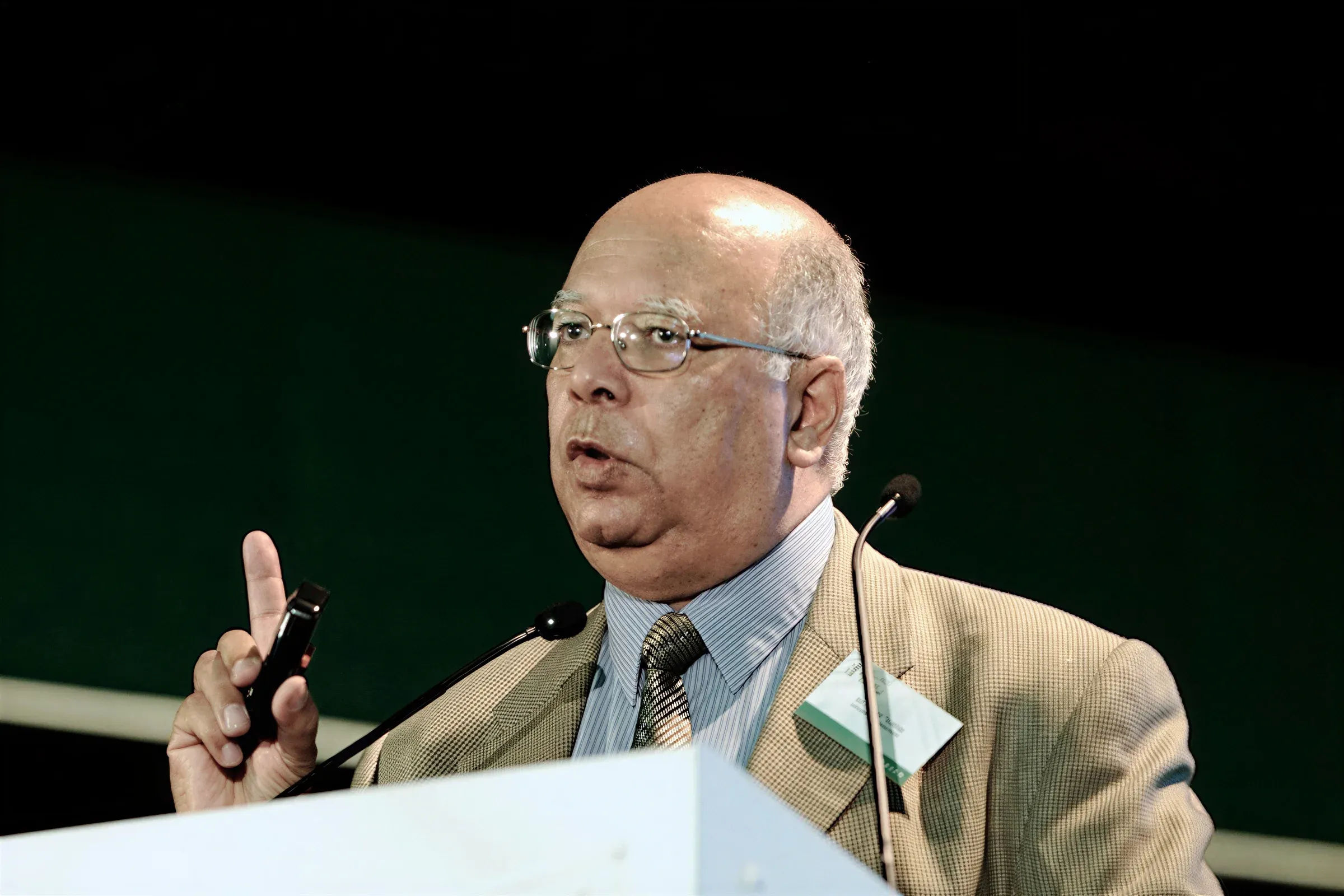
Dr Tadros speaking during a conference appearance (image via Construction Week Online)
The first time Maher Tadros encountered concrete, he was told to water it.
He was eight years old, standing inside his family’s half-built apartment building in Minya, a city in Upper Egypt. The slab for one of the floors had just been poured, and Tadros’s job was simple: keep the concrete wet.
As he did so, he asked questions. Why water something that had already hardened? The adults explained: without moisture, the concrete would crack; water allowed it to gain strength. It was, in retrospect, a lesson not just in material science but also in process: what looks finished is often still becoming. The idea stayed with him.
“I guess [structural engineering] was embedded in my head from a young age,” he told tBE in an interview.
Decades later, that early curiosity would evolve into a deeply influential career in structural engineering. For over more than forty years, Tadros has helped shape how concrete is designed, manufactured, and deployed across the world. As a professor at the University of Nebraska, the author of more than a dozen patents, and the founder of eConstruct USA, he has become one of the most prominent advocates for precast and prestressed concrete systems — methods that, in his telling, are not just technically superior but unfortunately underutilized (eConstruct USA is affiliated with eConstruct in Dubai, the parent company of tBE’s originating startup. tBE maintains full editorial independence).
From Assiut, Egypt to North America: Where Tadros’s Engineering Thinking Took Shape
His path there was neither accidental nor entirely predetermined. After excelling in science and problem-solving as a young student, Tadros enrolled at Assiut University, where he studied structural engineering in a program that he describes in retrospect as unusually rigorous. It was a five-year degree, dense with coursework and relentless in its demands. “Instead of giving you one problem,” he recalled, “they give you ten.” The intensity, he believes, instilled in him not just knowledge but the habit of thinking through complexity rather than around it.
The foundation of his Egyptian education carried Tadros to Canada for graduate study, and eventually to the United States, where he would spend the bulk of his career. At Nebraska, he helped build a research program from scratch. In the early years, there wasn’t even a proper structures lab. One of his graduate students conducted seismic testing for precast systems in a parking lot in the depths of a Midwestern winter. The work got done anyway.

Office in Sioux Falls- America's first commercial project to utilize UHPC for structural use, designed and led by Dr Maher through e.construct USA
Why Precast Concrete Became His Focus
That story, for Tadros, is less about hardship than about mindset. Engineering, as he sees it, is not constrained by ideal conditions, but driven by persistence, collaboration, and a willingness to test ideas wherever and however you can.
If there is a single throughline in Tadros’s work, it is his insistence that the problem is no longer the material itself. Concrete technology, he argues, has already reached extraordinary heights. Precast concrete — a material manufactured in controlled factory environments rather than on-site — allows for tighter quality control, reduced waste, and faster construction timelines. Prestressing that material takes it further, introducing internal compression to counteract tensile stresses before loads are even applied. For Tadros, this combination represents the apex of structural materials: stronger, lighter, and more durable than traditional reinforced systems.
But adoption has been uneven, and the reasons, he suggests, are as much cultural as technical.
In the United States, he points to a deeply risk-averse environment shaped by liability and litigation. Engineers, bound by licensure and professional exposure, are often hesitant to experiment with unfamiliar systems. In this context, innovation is restricted to research labs and adopted only after being proven elsewhere first.
“In the US, we write patents and research papers. We’re good at that,” he said. “And then we wait until the rest of the world uses them, and then we use them.”
Ideas That Scaled and Ideas That Are Stalled in Adoption
In the Middle East, the dynamic is almost reversed. In cities like Dubai and Cairo, developers and contractors are often more willing to invest in new methods, driven by a desire to demonstrate capability on a global stage. That openness, Tadros believes, can be a strength, provided it is matched with technical understanding.
“You need to couple the willingness to innovate with talent,” he says. “Otherwise it becomes a hazard.”
This tension between invention and implementation runs through much of Tadros’ career. He holds more than two dozen U.S. patents, but he is quick to distinguish between financial success and intellectual satisfaction. One of his most commercially successful innovations, the THiN-Wall system, eventually led to a lucrative deal with Owens Corning. Yet the ideas he is most excited about are often the ones still waiting to be realized.
Among them is a floor system designed to dramatically increase span lengths up to 18 meters while integrating mechanical and electrical services within the structure itself. The concept eliminates the need for dropped ceilings, reduces material use, and simplifies construction. It is, by his account, both elegant and practical. And yet, like many of his ideas, it has struggled to find early adopters in the U.S., where questions of cost, risk, and guaranteed demand tend to stall experimentation.
For Tadros, the adoption of advanced concrete materials and systems is not innovation for its own sake, but a pathway toward decarbonizing the industry.
Concrete is often criticized for its environmental impact, and not without reason. But focusing on material inputs alone, he argues, misses the larger picture. Ultra High Performance Concrete, for instance, may have a higher carbon footprint per cubic meter, but its superior strength allows for thinner sections and longer spans. Structures built with UHPC use less material overall, require less maintenance, and last significantly longer — centuries rather than decades — making them better for the environment in the long term.
“It’s a systems approach,” he said. “Not an individual raw material approach.”
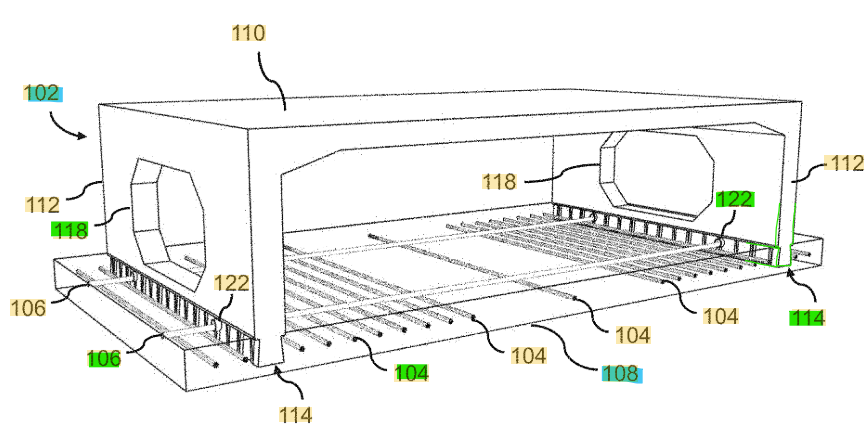
Concrete Voided Floor Panel- a system capable of spanning 18 meters without intermediate columns, something traditional voided slab systems cannot achieve at comparable depth and weight.
Tadros traces this systems thinking back, in a way, to his boyhood watering concrete in Minya, where he learned that performance depends on process and that small interventions can shape long-term outcomes.
Today, as both an educator and a practitioner, Tadros places equal emphasis on another kind of infrastructure: people. In his interview with tBE, he emphasized the importance of mentorship of younger engineers and about the cultural conditions that allow innovation to take root. Technical skill, he insisted, is only part of the equation. Recognition, collaboration, and shared ambition matter just as much.
“If one of us is successful,” he said, “we try to celebrate that.”
It is a philosophy that has carried him from a construction site in Upper Egypt to the forefront of a global industry, and one that, like the concrete he first encountered, continues to evolve under careful attention.
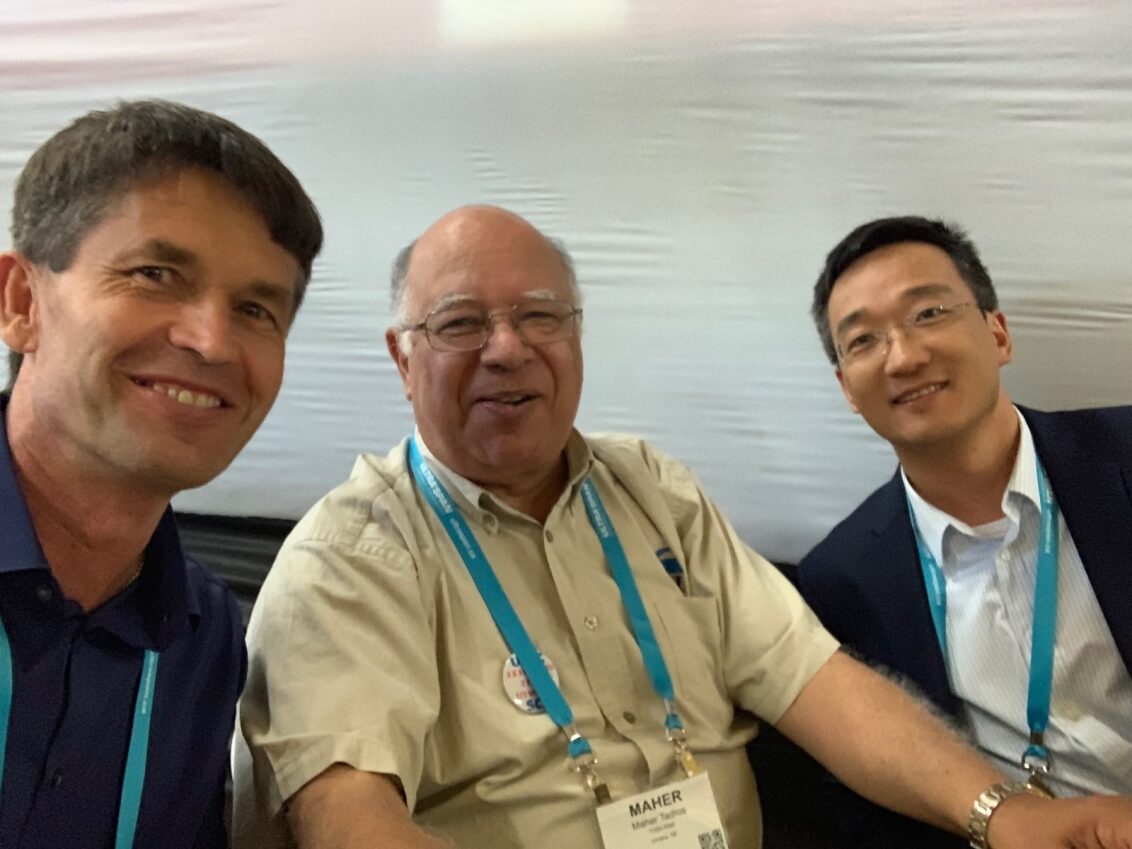
Dr Maher and Colleagues (tbd)