History & Culture
Concrete Modernity and the Making of Modern Egypt
Written by Ramzi Jaber, Cofounder of VAES.AI
Published: 1st October 2022 12:34 PM
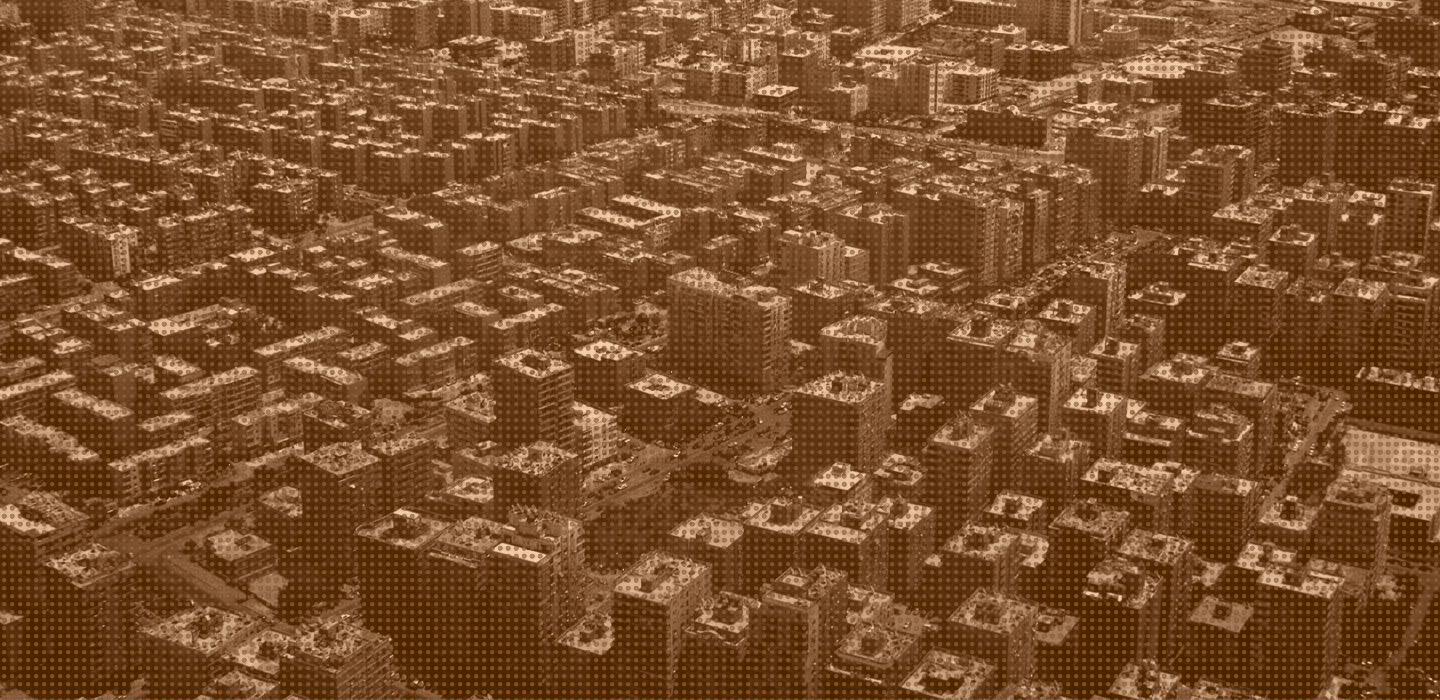
Aerial view of Cairo's concrete cityscape.
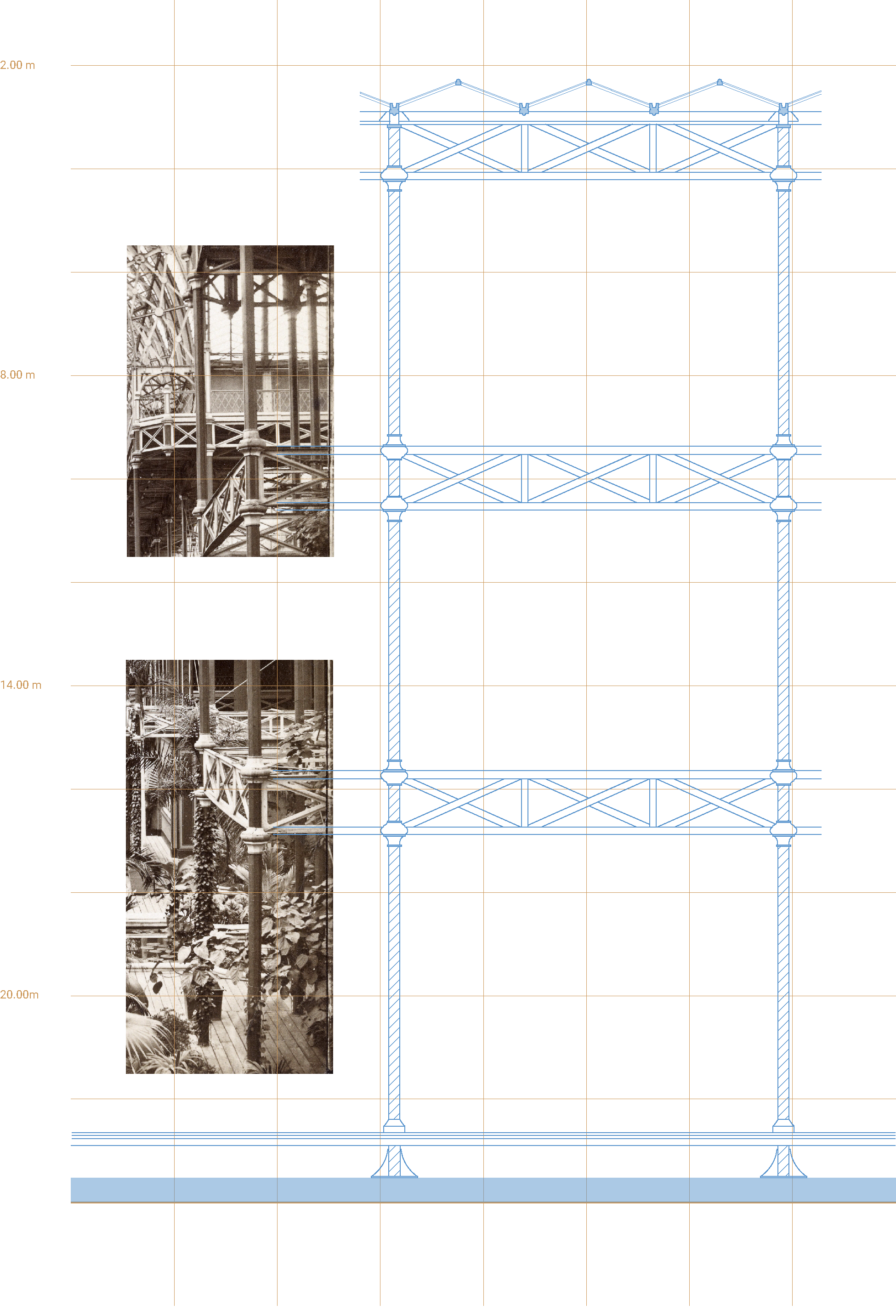
Illustration of one bay of the crystal palace’s steel structure
When Egyptian elites arrived at London’s Crystal Palace for the Great Exhibition of 1851, they were not merely touring a spectacle of glass and iron. They were encountering solutions to problems Egypt would face in the decades to come: how to move goods quickly across long distances, how to build faster, and how to govern cities that were growing beyond their historic centers. Under the sunlit nave of the revolutionary glass and iron structure, visitors encountered a new material order — one that promised speed, reproducibility, and modern governance.
That same year, British contractors began working on the railway line from Alexandria to Suez, the second railway system in the world at the time. Less than two decades later, the Suez Canal opened, promising a speedy trade route between Europe to British India. These new transit corridors would lead to urban growth in Cairo, as well as in the port city of Alexandria. A major French writer of the period observed that Egypt was, “clearly chosen to introduce modern civilization to the rest of the Orient.”
If Egypt was to play that role, it needed to look the part. To do so, its rulers would to have to build at a pace and scale that older systems could no longer sustain.
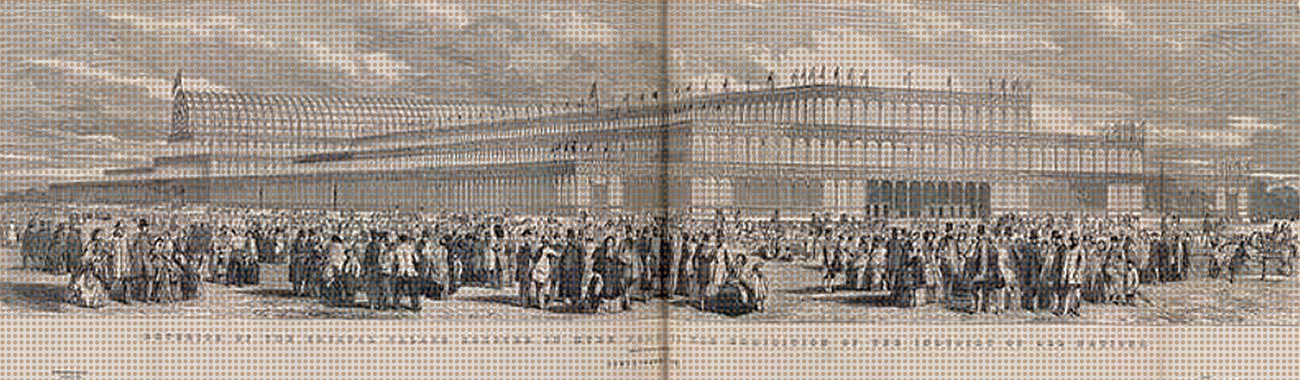
Exterior of the Crystal Palace built in London for the Great Exhibition of 1851.
From Ancient Materials to Industrial Concrete
For millennia, Egyptians had built in stone. Abundant limestone, granite, and sandstone shaped temples, homes, and cities that endured for centuries. Egypt also possessed early knowledge of cement-like materials: gypsum and lime-based binders were used in mortars, masonry cores, and possibly even caste stone elements in antiquity. These materials were locally produced, low-energy, and deployed in a limited capacity. Over time, however, stone and wood prevailed — stone because it was abundant and durable, wood because it suited smaller structural needs, even if high-quality timer had to be imported.
But by the mid-19th century, as Western techniques and urban ideals espoused at European world fairs arrived in Egypt, concrete and steel became increasingly attractive to elites seeking speed and architectural control. Under Ottoman governor Mohammad Ali, who ruled Egypt from 1805 to 1848, Cairo had become the de facto administrative capital, home to ministries, military command centers, and modernization projects.
Cast-iron balconies and imported concrete elements began to appear along the city’s boulevards. European-style housing, public buildings, and factories required materials that could be standardized, replicated, and erected quickly. Stone was slow and labor-intensive; timber was expensive and limited. Concrete, by contrast, offered a practical solution for ambitious urban projects, while European models of modernity legitimized it aesthetically and institutionally. “Economics had a big role in it,” explained Egypt expert Mercedes Volait in an interview with the tBE team. “If you want a very ornate structure, doing it in iron and concrete is much cheaper than doing it in stone.”
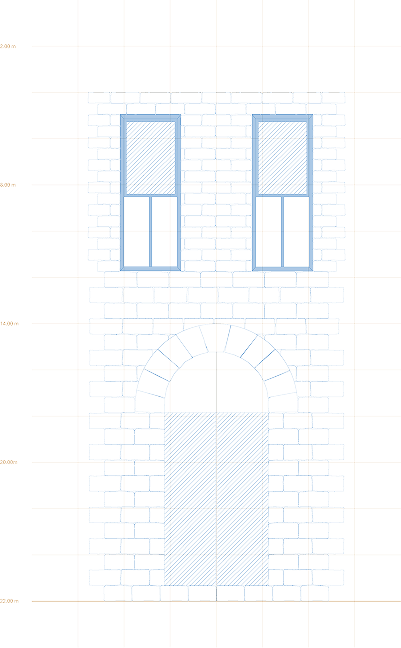
Illustration of a building’s Limestone Masonry elevation.
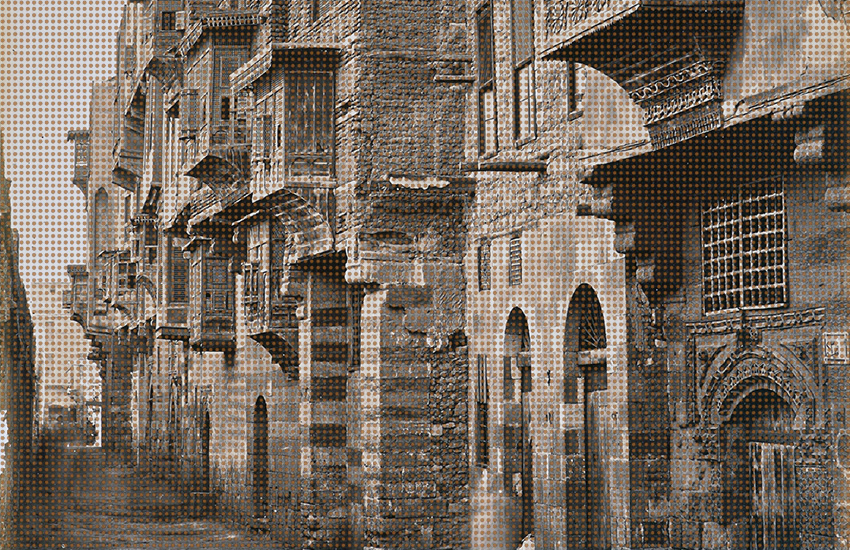
Load-bearing limestone buildings and cantilevered wooden lattice screens in Cairo
Exhibiting Modernity, Standardizing Solutions
Europe’s 19th-century world fairs played a central role in shaping Egypt’s construction choices. These exhibitions did more than display goods; they projected an image of modernity marked by specific materials and production methods. Only eleven years before London’s Great Exhibition, Britain had fought Mohammad Ali’s forces in Lebanon and imposed the 1838 Anglo-Ottoman Treaty, opening Egyptian markets to British goods and undermining local industry. At the Crystal Palace, however, the hosts put on a spirit of collaboration.
Egypt was given prominent space to display its prized long-staple cotton, while Britain showcased industrial machinery — hydraulic presses, iron frameworks, and mass-production systems. As Laurie Parsons, author of Carbon Colonialism, explained in an interview, Britain used the exhibition to present itself as the center of a new empire grounded in scientific and technical authority. “If you look at the posters of the empire at the time, it’s all about trade — bringing resources from the periphery to the center,” Parsons said.
World fairs encouraged Egyptian rules to import not only materials, but standards. European engineers secured contracts for railways and factories. At the 1867 Paris Exposition, Ottoman ruler of Egypt Ismail Pasha was so struck by the ornate Moorish Kiosk in the Prussian section that he commissioned its architect, Carl von Diebitsch, to design the portico of Cairo’s Gezira Palace for the opening ceremony of the Suez Canal in 1869. Later, Diebitsch re-cast traditional Egyptian wooden mashrabiyya screens in iron — a update that proved popular among residents of Cairo, where residential buildings were prone to fires.
The message was clear: concrete and iron were the materials of modernity, and elite desire ensured that these techniques would take root in Egyptian cities.
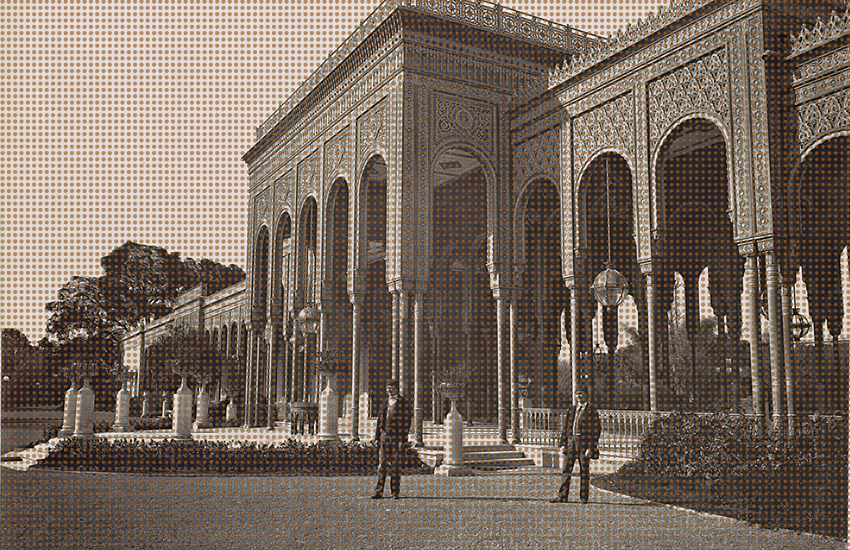
The ironwork portico façade of the Gezira Palace built in 1869.
Urban Planning and the Architecture of Governability
Concrete’s dominance was reinforced by institutions. In 1834, Mohammad Ali established Egypt’s first centralized planning committee for public works, the Conseil de l’Ornato, in Alexandria, which planned streets networks and issued building permits and demolition approvals. European engineers were appointed to the commission, initiating a shift from local building practices to centralized oversight.
Following the 1867 Paris exhibition, Ismail Pasha returned impressed by Haussmann’s urban renewal of Paris. With the support of Minister Ali Mubarak, he launched a similar project in Cairo, carving wide boulevards through dense neighborhoods in Western Cairo and granting land to those who built in European styles. The grandest changes were implemented in the Azbakeya district, where the Cairo Opera House was constructed in 1869. “It was a way to instigate real estate development,” Volait explained.
These reforms privileged materials suited to speed and standardization. Wide streets required reinforced structures; standardized plots favored standardized building laws, replacing traditional master builders in favor of architects who emphasized uniformity over local adaptation. Concrete fit perfectly into this new logic of urban governability.
Concrete’s early use remained largely in elite neighborhoods and industrial factories during the 19th century, its adoption driven by aesthetics, speed, and practicality — not necessity. By the 20th century, however, Egypt faced explosive growth, from a population of roughly 20 million in 1950 to one of over 65 million in 2000. Acute housing shortages accompanied the demographic shift. Soon enough, even informal settlements were being built in concrete, because it was accessible, affordable, and durable. What had begun as an elite preference became a practical necessity for the entire urban population.
By the 21st century, Egypt had transitioned from a net importer of cement to one of the world’s largest exporters, exporting $852 million worth in 2023 alone. This transformation was driven by federal policies aimed at expanding heavy industry and leveraging the country's energy resources. Government support for cement producers — primarily by granting them access to relatively low-cost natural gas — sharply reduced production costs and expanded industry capacity. At the same time, tightening climate regulations and local pollution concerns made cement production increasingly costly and politically unappealing in Europe. As European producers scaled back, Egypt effectively filled the gap, exporting cement to regional and global markets.
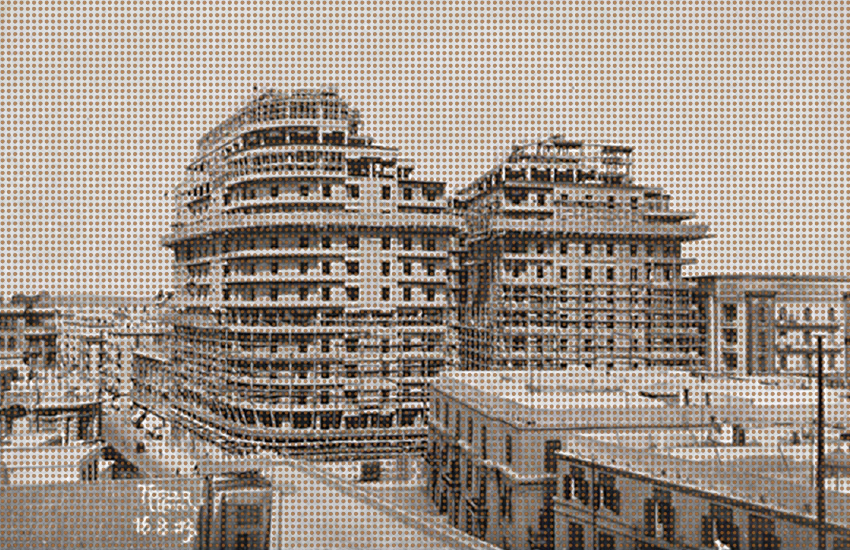
Immobilia Building during construction in downtown Cairo.
Locked Into Modernity
By the late 19th century, Egypt was fully integrated into a global network of materials, labor, and logistics. Railways connected crop fields to ports, factories adopted iron skeletons, and cities expanded along European planning templates. Concrete was no longer just a tool of aesthetic display — it became the structural language, a necessity, of modern Egyptian urban life.
This was not simply cultural seduction, nor pure economic determinism. Western modernity made it attractive; practical pressures made it unavoidable and dominant.
Egypt is just one example of a broader story. The same combination of imported architectural standards, urban ambitions, and practical necessity drove concrete to become the de facto material of modernity across much of the non-Western world. Cities in South Asia, Africa, and Latin America experienced similar trajectories — local materials gave way to imported or industrialized ones, elites embraced European models of urbanity, and standardized building materials became central to industrializing economies.
The environmental consequences of this global shift are profound. Today, the construction industry accounts for roughly 18% of global greenhouse gas emissions, and the production of cement constitutes the lion’s share of that sum. Pollution is woven into the very fabric of modern cities, a legacy of the 19th century global spread of industrial building practices. Scholars like Parsons argue that “the empire is essentially dedicated to separating value from waste, and you leave the waste at the periphery,” a dynamic that continues in the construction industry today through long, complex supply chains that obscure environmental costs.
For Egypt, and for much of the Global South, the challenge is clear: how can urban growth and development continue while curbing the climate impact of a material that has become foundational to modern life? Across disciplines, scholars and industry practitioners are beginning to test alternatives, from lower-energy materials like compressed steel to hybrid construction techniques to the revival of vernacular building adapted for contemporary needs. Some of these experts argue that the most meaningful change may come not from abandoning concrete altogether, but from redesigning how cities are planned, built, and valued. If concrete once symbolized progress, the next chapter of modernity may be defined by how thoughtfully — and sparingly — it is used.